
I.
Introduction
core positioning and target audience
Online retailer Samokat (Самокат) is one of Russia’s largest express delivery services for groceries and household goods. At first glance, Samokat seems to be all about speed. Couriers scurrying through neighborhoods, promising to deliver cold ice cream or a hot croissant in fifteen minutes. But that’s just the tip of the iceberg, the pretty packaging. Inside lies a far more daring idea. Samokat doesn’t sell food or household chemicals. It sells time. And it does so with such taste, self-irony, and understanding of other people’s lives that it has transformed from a simple delivery service into one of the leading cultural provocateurs in the Russian market.
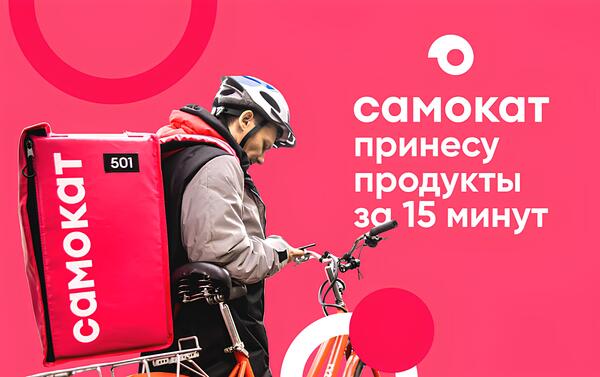
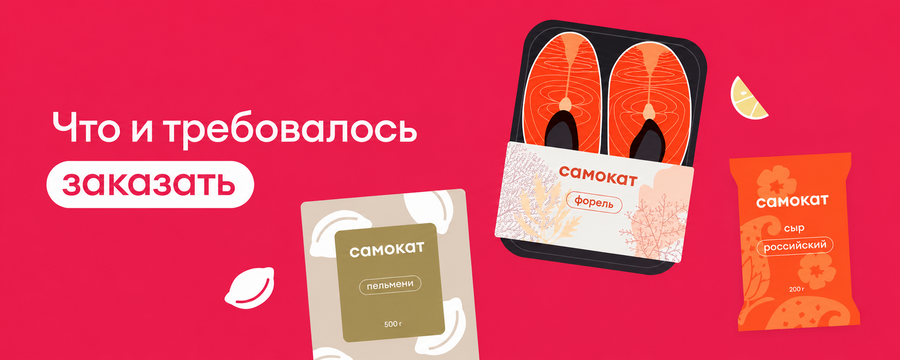
Samokat (Самокат) website, message about brand delivery speed
The service operates on the Q-commerce (fast commerce) model. Orders are collected not in traditional supermarkets, but in dark stores (order fulfillment centers) located within residential areas. This allows for grocery delivery by foot and bike couriers in a record 15-30 minutes, with free delivery.
In addition to well-known brands, Samokat places a strong emphasis on its private label. The company partners with local producers (for example, Molochnaya Kultura), releasing ready-to-eat meals, dairy products, cheeses, snacks, and household chemicals under its own name.
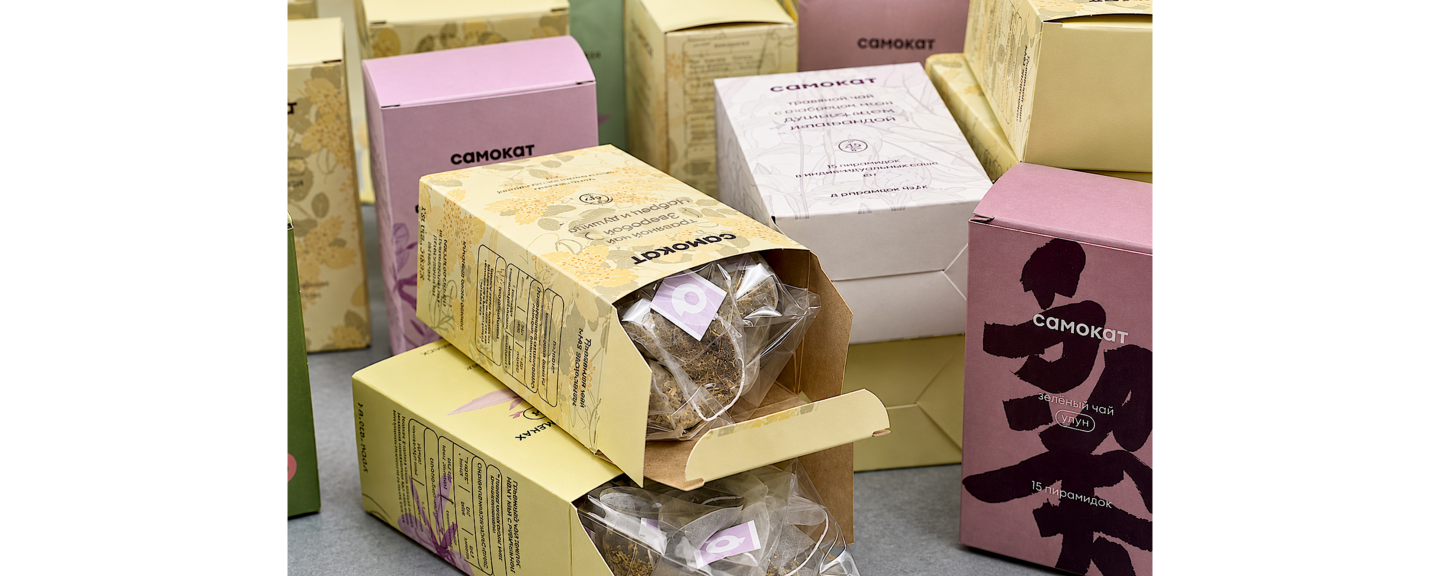
Example of private label goods
The brand’s target audience is city residents aged 20 to 40, who acutely feel the passage of time. The slogan «15 minutes of self-care» sounds almost revolutionary in a culture where women (and historically, women have been the core audience) have been tied for centuries to the stove, grocery lists, and guilt over undercooked borscht. Samokat removes this guilt with surgical precision. However, according to statistics, men even outnumber the website’s visitors.
The slogan «15 minutes of self-care»
II.
Communication Channels
overview of the brand’s public field
The brand’s social media isn’t a display case with price tags, but a TikTok or Pinterest feed brimming with ideas. Telegram, Samokat’s main platform, has become a haven of power. Here, people speak boldly, as equals, without coddling or patronizing tones. Whenever a city news story breaks, from a sudden snowfall to the premiere of a smash hit film, Samokat is the first to respond, with self-mockery and memes. They’re not afraid to prank their customers, and especially not themselves.
Examples of advertising posts for new products in brand’s Telegram channel
Content has long since moved beyond the «buy-buy» category. You might stumble upon a stop-motion recipe, where the ingredients themselves leap onto the plate to a lively beat. Guest columns are a separate art form. For a day, the service’s Telegram channel can be given over to a stand-up comedian, food blogger, or artist. They tell stories about their lives, and the feed becomes a stranger’s personal diary, carefully woven with food items.
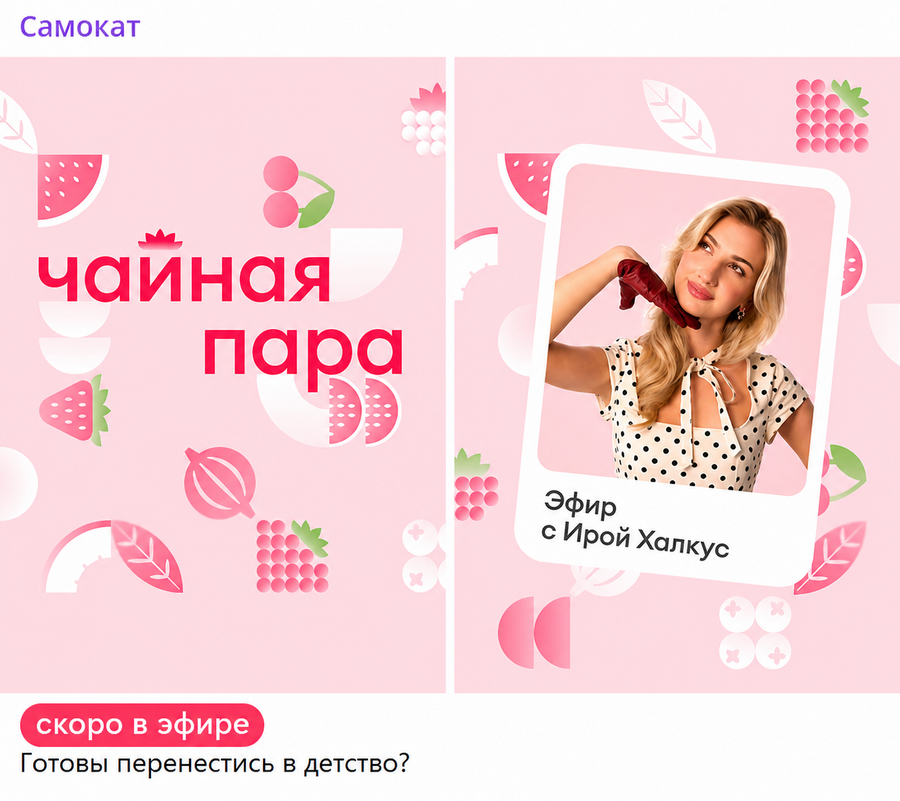
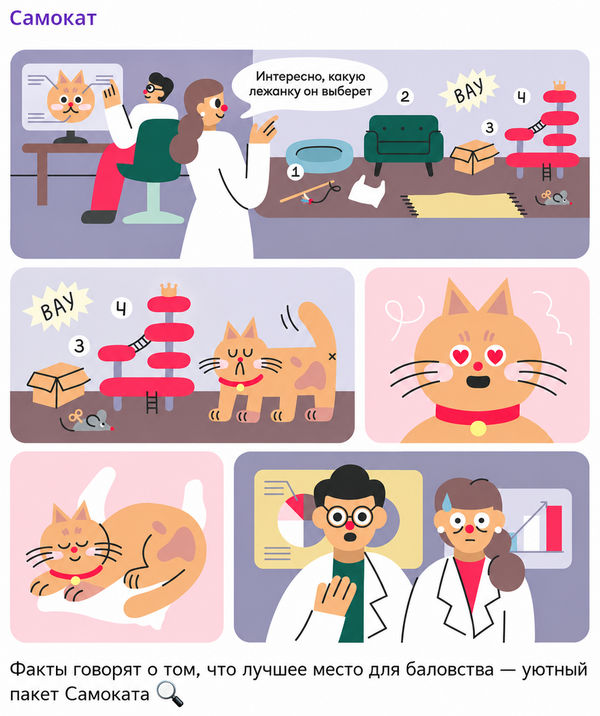
Examples of posts not directly related to sales
Samokat’s PR strategy is built on lifestyle marketing, large-scale special projects, and urban dominance (bright outdoor advertising, metro integration, branded pink courier bags). The vibrant brand color attracts attention, and good design helps establish a strong presence in consumers’ minds.
Example of outdoor advertising
Samokat’s marketing strategy relies heavily on cross-brand partnerships. The brand uses collaborations to reach a new audience (gamers, zoomers, fashion community) and create news channels.
Collaborations with Asian gaming giants (in particular, with HoYoverse) have become some of the brand’s largest digital activations for attracting a younger audience (Zoomers and Alphas).
Promotion picture of Samokat and Genshin Impact collaboration
For example, the collaboration with the game Genshin Impact involved the release of limited-edition private-label food products (ice cream, lemonade, desserts) in unique packaging featuring popular game characters. Additionally, exclusive souvenirs (badges, keychains, T-shirts) were produced, as well as the launch of a themed interactive mini-game within the official Samokat app, where users accumulated points and exchanged them for promo codes or in-game currency (Primogems).
Products from the Samokat and Genshin Impact collaboration
The collaboration with Zenless Zone Zero (ZZZ) followed a similar pattern, but was distinguished by the fact that the virtual «Samokat» courier, in his signature pink uniform, was integrated directly into the gameplay as an NPC (character) for quest completion. Themed merchandise was also released, and a special «quick snack» menu was created in the app. Purchasing branded merchandise (such as limited-edition cotton T-shirts) also earned users «tickets» to enter a large drawing for valuable prizes.
Samokat and Zenless Zone Zero (ZZZ) collaboration products
III.
Theoretical Framework
дописать
Uses and Gratifications Theory was chosen for the analysis, serving as the analytical lens for the study. We believe this theory is ideal for analyzing the brand we’ve chosen, as Samokat, as an online platform, is heavily dependent on the internet and social media.
To successfully work with a theory, you first need to understand its core principles. Uses and Gratifications Theory has several core assumptions:
— Media use is goal-oriented; People do not consume media randomly. — Consumers actively dictate their media intake rather than being passive recipients. — Individuals consciously select media they expect will satisfy their specific needs. — Users are typically aware of their own media motivations and can articulate them. — The media compete with other resources for need satisfaction.
Thus, theory suggests that for any media outlet to be successful, it must meet the needs of its audience. Otherwise, the audience will not be interested in the media. Let’s look at what needs Samokat meets in its communications with its audience and how successfully.
However, first, we need to define what specific needs we’re talking about. According to the theory, users turn to the media to satisfy five primary categories of psychological and social needs. These can be described as follows:
— Cognitive Needs: Acquiring knowledge, information, and understanding — Affective Needs: Seeking emotional experiences, pleasure, and entertainment — Personal Integrative Needs: Boosting credibility, status, and personal identity — Social Integrative Needs: Connecting with friends, family, and communities — Tension-Free Needs: Escaping reality, relaxing, and relieving stress
All that remains is to determine which specific needs the brand addresses in its communications, and what strategies it uses to fulfill these needs.
IV.
Analysis
proofs
The Samokat builds its communications around the concept of self-care. The brand addresses several key needs at once, shifting the focus from basic grocery ordering to emotional engagement, everyday life optimization, and support for users in the fast-paced urban environment. This concept allows the brand to meet several consumer needs at once.
The closure of Tension-Free Needs directly stems from the brand’s core positioning. One way to address this need is by freeing users from routine. The brand takes care of everyday tasks (shopping, in this case), helping users relax, de-stress after work, and dedicate this time to themselves.
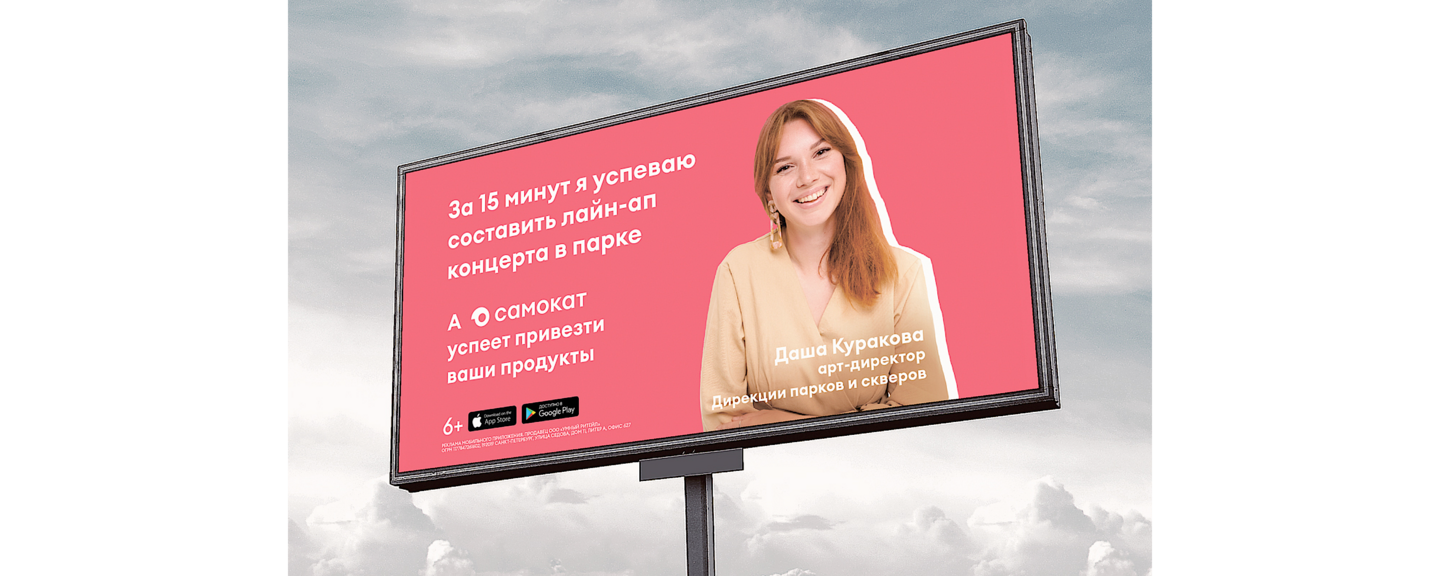

Examples of outdoor advertising that talks about the speed of food delivery