Rubricator
— Communication theory in the field of design and contemporary art — Presentation of your brand for a general audience — Presentation of your brand for a professional audience — How we came to such a strategy: the connection between theory and practice — A list of literature and sources of images
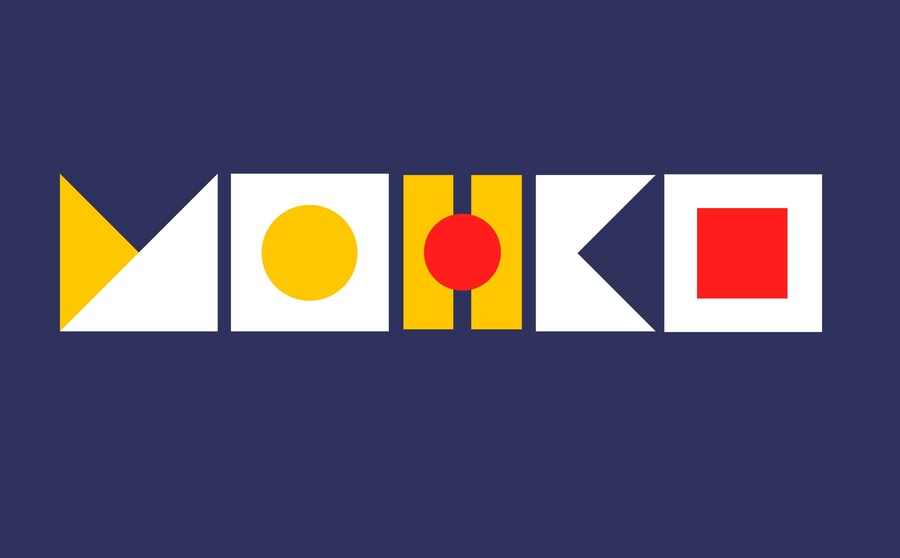
Brand ''MONKO''/ logo
Communication theory in the field of design and contemporary art
Communication theory is inseparable from the very essence of modern design and contemporary art if we consider their core definitions. As Mark Aakhus argues in his 2007 article, «Communication as Design»: «Design is an activity of transforming something given into something preferred through intervention and invention.» This perspective allows us to conclude that design serves as both a methodology for understanding communication and an analytical framework for exploring the social world from a communicative standpoint.
Expanding on this, a central tenet of modern design theory is that any product must effectively communicate its function and the correct way to use it. The case of contemporary art is somewhat different: while the «culture industry» often produces art that pacifies audiences and creates false needs, critical contemporary art actively seeks to disrupt this process. It communicates critique, ambiguity, and resistance to commodification and standardization. Consequently, rigorous theory suggests that understanding modern art and design requires analyzing them as complex communicative acts — ones that are deeply embedded in, and responsive to, the major communicative, technological, and power dynamics of the modern world.
Design and contemporary art are communication (semiotics, rhetoric, narrative)
This specific section provides a direct comparison of the information from the online course regarding semiotics and rhetoric «traditions» and the theory of design and contemporary art industry. The goal is to demonstrate that communication theory is operative within the realm of modern creative industry more broadly.
Semiotics is primarily defined as a core tradition of Communication Theory because communication is fundamentally understood as the sharing of meaning through signs, symbols, and their interpretation. This establishes semiotics not as a peripheral topic, but as a central framework for understanding communication itself. Since its modern revival, semiotics has found a primary and lasting audience within the design profession.
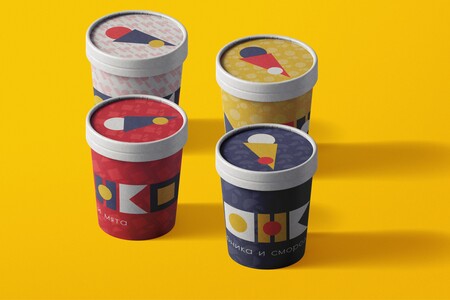
packaging ''MONKO''
Design — a practice-driven field often lacking in theoretical cohesion — found a potential anchor in various aspects of semiotics. Among these are the consistency of representation, the means employed, the type of interpretation made possible or necessary, and the relationship between design and the final product. Thus, designers work towards an objective (a final version of a product) to be achieved with the help of representations of their goal, which implies that design cannot be interpreted without an utter understanding of semiotics. Rhetoric is not a separate field but is also presented in the online-course as one of the traditions and applied branches within the broader discipline of communication theory. Rhetoric is the progenitor of systematic thought about intentional, audience-focused communication, especially if we consider the fact that modern communication theory solely builds upon, critiques, and expands ancient foundations about analyzing and creating effective messages.
ice cream bus «MONKO''
Rhetoric and design are linked by several fundamental traits: broad transdisciplinary applicability, an engagement with the specific and the likely, a reliance on inventive and judicious thinking, and a foundational practice of arranging elements in space and time. Operating as a rhetoric with an unlimited palette, unrestricted to words, design, (according to Richard Buchanan paper works), can «…dissolve the boundaries of old fields and disciplines and establish new ones that address current and emerging problems of cultural life».
Design forms meanings through visual symbols, structure, and interaction
We cannot overlook the connection between the conception of modern Design and the Socio-Cultural Tradition. This tradition posits that individuals dynamically adapt their identities across different contexts, while also asserting the paramount influence of culture on the very processes of communication and meaning-making. In other words, it insists that to understand communication, one must look beyond the individual sender and receiver to the intersubjective space between them, where society is continually being written into existence.
Based on this analysis, we can conclude that human culture can serve as both an informational resource and a wellspring of inspiration for product innovation, enabling designs that resonate with user traditions. Research consistently demonstrates that culturally-oriented products embody meaningful content reflective of user lifestyles. Furthermore, they impart significant symbolic value — personal, social, and cultural — which directly facilitates product acceptance.
Design as a means of building relationships
Relationship Management Theory (RMT) is also strongly connected to design, however in a more profound and strategic way: Design is a primary tool for building and maintaining the relationships that RMT deems essential. It shifts the role of design from creating discrete objects to orchestrating long-term user experiences that foster trust, commitment, and mutual satisfaction.
media ''MONKO''
The core metrics of a good relationship in RMT are directly impacted by design decisions:
- Trust. Design builds trust through integrity, dependability, and competence;
- Satisfaction. Design ensures the benefits of interacting with a product/service outweigh the costs. A pleasurable, efficient, and valuable user experience is the engine of satisfaction;
- Commitment. Design can foster emotional attachment and loyalty through aesthetics, personalization, and creating a sense of shared identity. It makes the relationship feel unique and worth maintaining;
- Control Mutuality. Good design empowers users, giving them appropriate control. Features like customizable settings, clear consent options, and undo functions communicate respect for the user’s autonomy, balancing the power dynamic between user and system.
Thus, the Relationship Management Theory provides the strategic «why» that elevates design from a tactical craft to a core business and social function. It argues that the ultimate measure of a design’s success is not just usability or aesthetics, but the quality of the long-term relationship it facilitates between the user and the organization. In summary, the bond between communication theory and design is not a recent trend but a fundamental and permanent alliance, rooted in their shared purpose: the intentional creation and negotiation of meaning. From its very origins, design has been an applied form of communication. Whether through the semiotic function of a medieval guild’s sign, the persuasive rhetoric of a political poster, or the socio-cultural cues embedded in a product’s form, design has always been about encoding messages for an audience. It was a practice in search of its underlying theory.
Together, they form the essential discipline for shaping a humane, understandable, and meaningful world. As long as we strive to create objects, interfaces, and systems that speak to others, this vital dialogue between theory and practice will continue to guide our way forward.
Presentation of your brand for a general audience
«MONKO» is more than just ice cream, it’s the perfect dessert on the go. The brand solves the problem of finding unique gastronomic pleasure by turning it into an exciting adventure. Ice cream trucks travel around the city. Inside, you can try various flavors — from classic to the most unusual. Plus, the ice cream has a beautiful geometric shape, so eating it is a special treat for both the eyes and the taste buds.
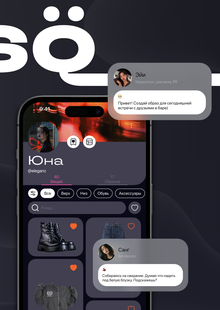
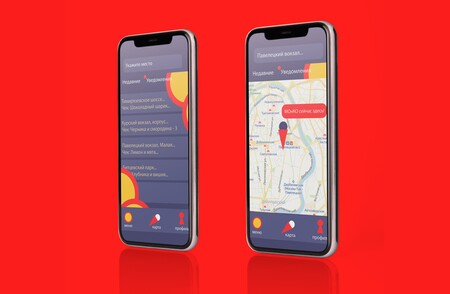
To find out where the trucks are located, you can use a mobile app. This way, the brand bridges the online world with real life.
media ''MONKO''
Primary target audience: Active youth and students aged 18-25 who value new experiences, spontaneous content, and are perfectionists. Secondary target audience: Young families with children who enjoy going out for an ice cream as a small family adventure. For both audiences, a good mood, new impressions, and an opportunity to share experiences with others are all important.
MONKO: You can never have too much of the perfect.
The slogans are tools of persuasion that grab attention. They emphasize the exceptional and consistently high quality of the product, while encouraging a simple but important action that instantly improves one’s day.
poster ''MONKO''
The brand’s strategy is built not on intuition, but on proven communication theories. Considering the product in practice, the first element to highlight is the Rhetorical Tradition. This is about persuasion through speech. According to Aristotle, to persuade, three things are needed: logic, emotions, and trust. The brand’s slogans work precisely this way. Logos (logic): The statement «you can never have too much of the perfect» is a logical argument about quality and accessibility. Pathos (emotions): Words like «beautiful,» «perfect» appeal directly to feelings, evoking desire and anticipation. Ethos (trust in the speaker): The confident, almost philosophical tone of the slogans creates the image of an expert brand that understands what makes ice cream beautiful and perfect.
MONKO’s slogans work not as mere advertising, but as concise, well-thought-out rhetorical arguments designed to elicit agreement from the audience.
Narrative Paradigm (by Walter Fisher) is about the power of stories. This theory states that people think not so much in logical chains as in stories. We are persuaded by stories that seem plausible and relatable to us. The entire «MONKO» brand is a ready-made story for the customer. In a big city, with the help of a magical assistant (the app), the customer embarks on a quest for treasure (the perfect ice cream) and finds it (the bright truck). This is a story about search and discovery, about the joy of a small victory. The story is coherent; elements like the trucks and the app are logically connected. The brand sells not just ice cream, but an exciting scenario for a day off or an evening, which the customer happily participates in.
poster ''MONKO''
Take a step towards the beautiful
Elaboration Likelihood Model (ELM) is about two routes to decision-making. This model explains how people process information. There is a deep, conscious route (when you compare characteristics at length) and a peripheral route — fast and emotional. For an impulse purchase, which ice cream often is, the peripheral route is critical. We influence it through visual triggers, emotions, and social proof: the perfect geometric shape of the ice cream, the bright truck design. It’s beautiful, you want to try it and photograph it. The feeling of celebration, the thrill of the «hunt» for the truck, nostalgia for childhood. Seeing a line at the truck or friends' photos on social media, a person thinks it must be delicious and beautiful there. We also use the strong central route (e.g., the ice cream’s composition), but secondarily, for those who are interested. The brand’s communication on social media, the truck and packaging design are consciously saturated with bright, emotional «hooks» that lead to a quick decision.