Structure:
- Concept and Communication Channels of Liquid Death
- Theoretical Foundations of Analysis: ELM Model and Dialogic Theory
- Analysis of Visual Persuasion: Applying the ELM Model to Social Media
- Analysis of Two-Way Interaction: Applying Dialogic Theory
- Synthesis and Strategic Recommendations
Introdution
Liquid Death is a brand that sells canned water

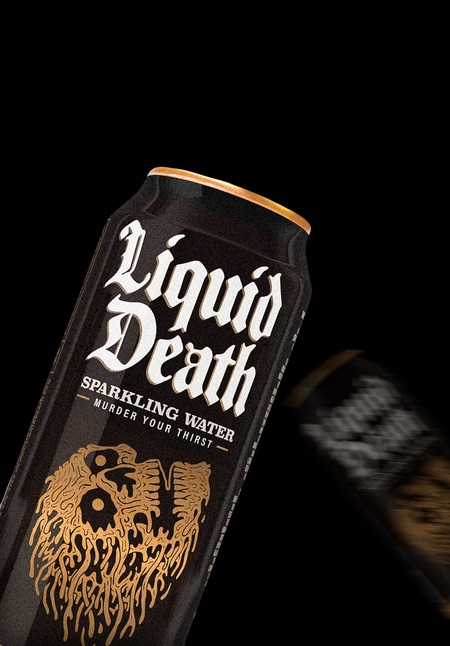
But it does not look like a normal water brand. Its design uses black colors, skulls, gothic fonts, and aggressive slogans like «Murder Your Thirst». The brand wants to look like a heavy metal band or an energy drink, not like a typical bottled water company.
The target audience is young people between 18 and 35 years old. They like punk, metal, skate culture, and dark humor. They are tired of traditional «green» and «healthy» marketing. Most water brands talk about purity, mountains, or health. Liquid Death does the opposite. It uses jokes, violence, and horror style.
So how does visual provocation replace rational arguments in brand communication?
1. Concept and Communication Channels of Liquid Death
Liquid Death is one of the brightest and most successful examples of modern marketing. The brand found a unique space in the very competitive drink market. Its strategy is not based on traditional water attributes — like cleanliness, freshness, and health — but on a radical break from these expectations. Positioning itself as a cultural phenomenon, not just a drink producer, Liquid Death turned a basic product into something people desire, connecting it with protest, alternative culture, and unique self-expression. The core of the concept is using aluminum cans, which are traditionally associated with energy drinks and beer.
This immediately creates a strong contrast with competitors like Nestlé Waters, Coca-Cola Bottling Company, and PepsiCo. This packaging choice is not random; it is the first and most visible signal from the brand, showing that it does not belong to the traditional water segment.
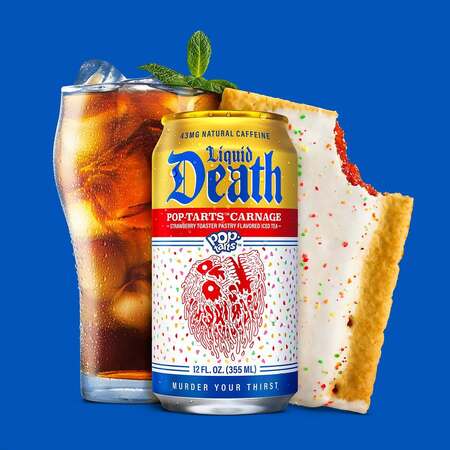
New drink «Liquid Death,» Instagram
The main goal of Liquid Death’s strategy is to attract a young audience, especially Generation Z. This group values authenticity, irony, and brands that express their own values. They stand against conservatism and mass consumption. Liquid Death answers these needs perfectly. It offers not just a drink, but a way to belong to a certain community. This community is based on a shared sense of humor and rebellion against mainstream norms. The brand successfully created a whole culture around itself that exists beyond the product, which is a strong foundation for long-term loyalty.
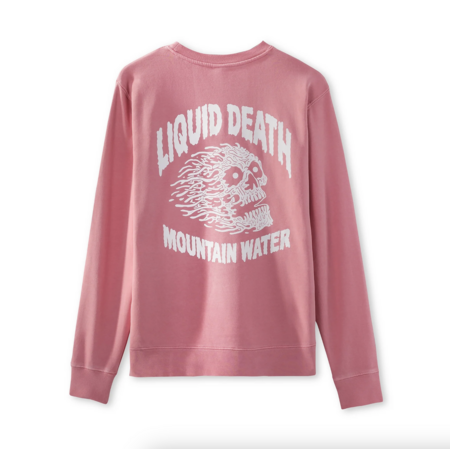
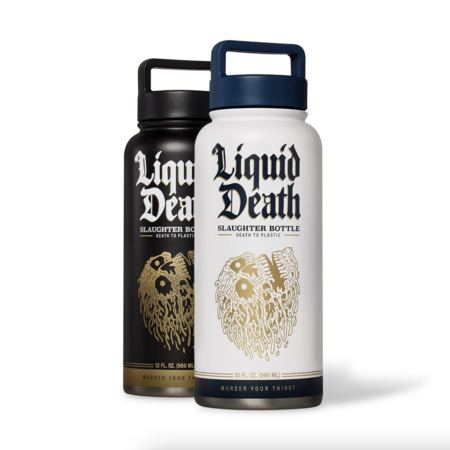
«Liquid Death» merch
Liquid Death’s communication strategy is built on the synergy of several channels. Social media plays the role of a platform, while the overall PR strategy strengthens it and turns digital influence into real action. The key platforms for the brand are TikTok and Instagram. These platforms are not used as one-way broadcast zones, but as living spaces for experiments, creating viral content, and building community.
TikTok, with its short, easy-to-access, and interactive videos, became the perfect place for bold, absurd, and often humorous content.
Instagram, on the other hand, allows the brand to develop its visual side in more detail, showing participation in events, cooperation with other companies, and more thoughtful advertising campaigns. The brand’s overall PR strategy aims to be «alive» and «real.»
«Liqid Death» promo video
It includes several key elements. First, there are active collaborations with other brands and people who share Liquid Death’s wild spirit. Second, the brand holds live events, such as the «Liquid Death Country Club» at major Live Nation Entertainment music festivals. This allows the brand to move its digital experience into physical space and strengthen audience loyalty. This integrated strategy creates a «flywheel» effect: organic content on social media generates reach and engagement, which PR campaigns and live events then strengthen, creating new viral content and supporting the growth cycle.
This complex communication model allowed Liquid Death not only to stand out from competitors but also to build a business valued at $1.4 billion, becoming an example of how to turn water into a cultural phenomenon.
2. Analysis of Visual Persuasion: Applying ELM to Social Media
Liquid Death uses the Elaboration Likelihood Model (ELM) in a very smart way. The brand focuses on the peripheral route to persuasion. This means people do not think deeply about the product. Instead, they are influenced by visual signals. This is perfect for social media like Instagram and TikTok, where users scroll very fast.
The brand uses visual shock to stop the scroll.
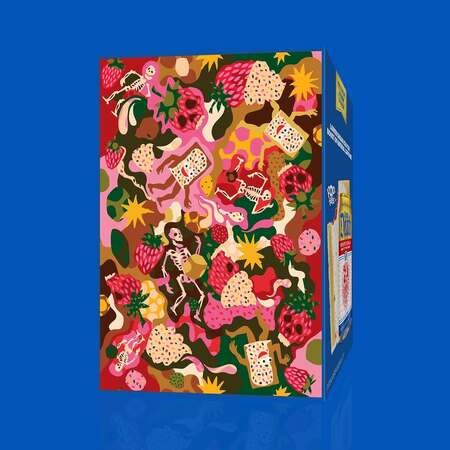
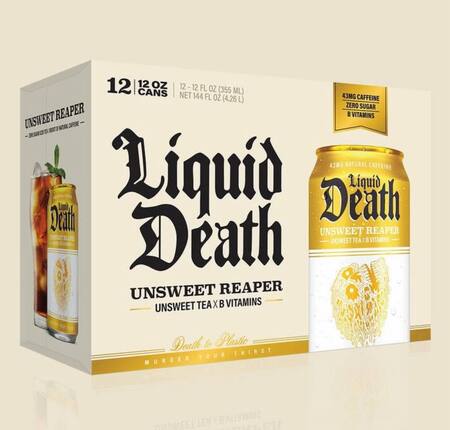
The sides of the «Liqid Death» boxes
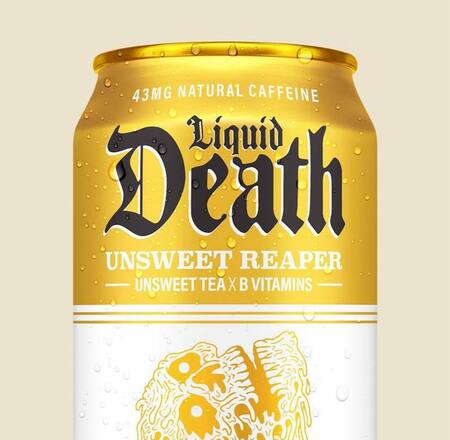
The aluminum can looks like a beer can, not a water bottle. The colors are black and white, not blue or green. The design uses graffiti, skulls, and chaotic images. These visuals are strong peripheral signals. They immediately tell the viewer: «This is not normal water.» When a user scrolls through TikTok, this contrast makes them stop and look.
Humor and absurdity are also powerful tools. Liquid Death makes videos where the brand «pranks» parents or parodies other ads. This humor reduces the viewer’s critical thinking. It creates positive feelings. For young people (Generation Z), this type of humor works very well. Older people may not understand it, but the target audience feels connected. This is a classic peripheral route: emotion before logic.
The brand also uses influencer collaborations. When a metal musician or a skateboarder drinks Liquid Death, it acts as social proof.
However, Liquid Death also uses the central route sometimes. The main central argument is environmental responsibility. Aluminum cans are easy to recycle. This is a real fact. New customers may not notice it at first. But people who want more information can find this argument. It gives them a good reason to buy the product. Another example is when Liquid Death launches a new product, like Sparkling Energy. The announcement may include facts about ingredients or health benefits. But even then, the brand keeps the dark humor and metal style. The result is a mix of peripheral and central elements.
In summary, Liquid Death is mostly a peripheral brand. It wins attention through shock, humor, and visual style. But it also adds central arguments for people who want to learn more. This combination makes the communication very effective.
3. Applying the ELM Model to Social Media
Applying the Elaboration Likelihood Model (ELM) to Liquid Death’s content on social media platforms like Instagram and TikTok reveals that the brand skillfully uses the peripheral route to persuasion to achieve maximum reach and create a unique image. It is the peripheral signals, not deep content analysis, that are the brand’s main tool for attracting attention in an oversaturated information space. Visual shock, which is the central element of the brand style, works precisely at this level.
Using tin cans instead of familiar bottles, the dominant black color, graffiti styles, and images of chaos, aggression, and extreme style (skateboarding, metal)
These visual signals make Liquid Death different from any other water brand. When a user scrolls through TikTok or Instagram, this contrast makes them stop and look.
Humor and absurdity are also powerful tools. The brand pranks parents or parodies other ads. This reduces critical thinking and creates positive emotions. Humor makes the brand more memorable.
For Generation Z, this humor works very well. It helps young people feel connected to the brand.
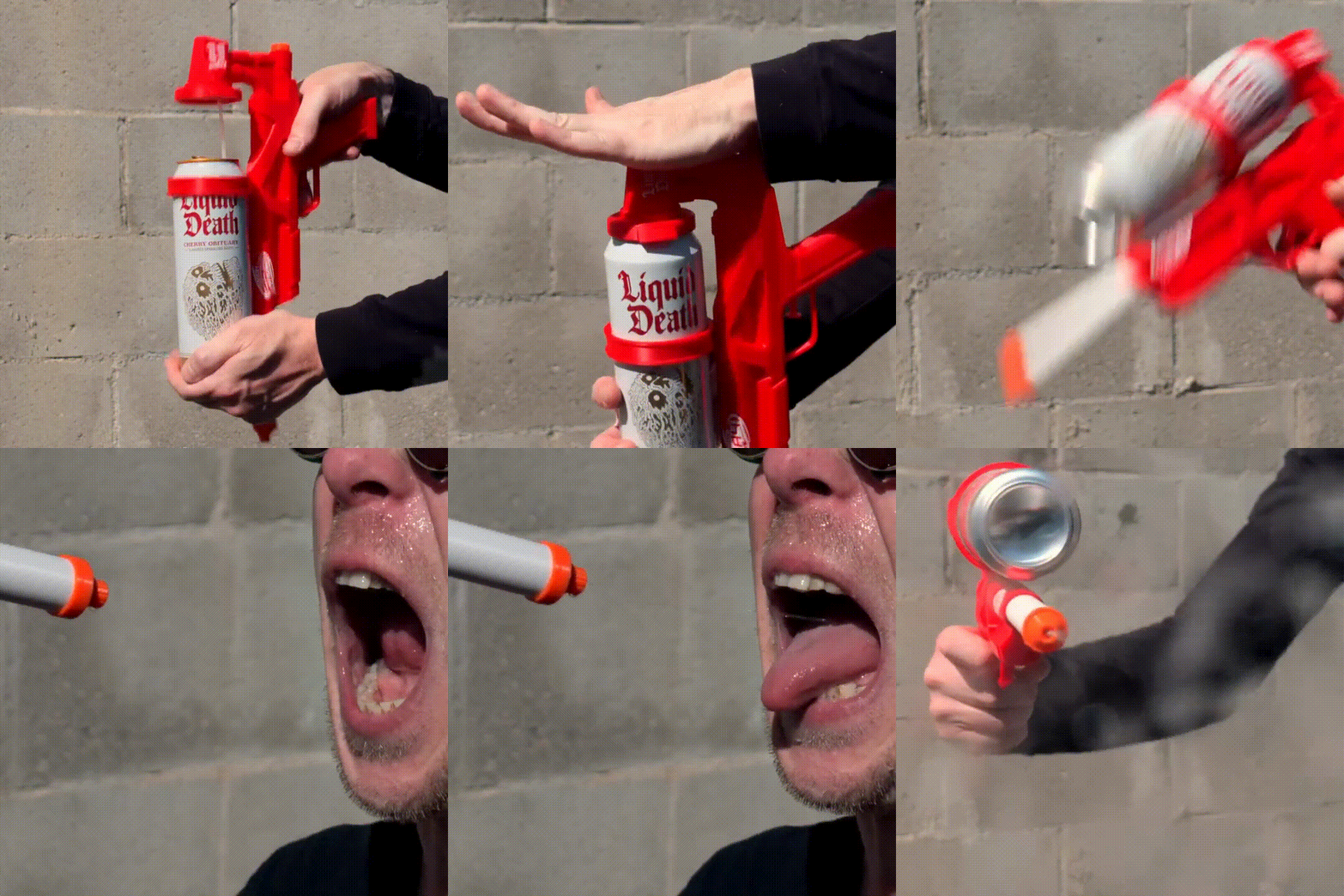
Liquid Death mostly uses the peripheral route. But sometimes it also uses the central route. This helps build loyalty with people who already like the brand.
One central argument is environmental friendliness. Aluminum cans can be recycled many times. This is a real fact. New customers may not care about this at first. But people who want more information see it as a good reason to buy.
Another example is new products like Sparkling Energy. The ads may include facts about ingredients or health benefits. But even then, the brand keeps its dark humor and metal style. This creates a unique mix of central and peripheral elements.
Thus, the analysis from the ELM perspective shows that Liquid Death’s strategy is thoughtful and multi-layered. The brand uses peripheral signals to «catch» the audience in the huge market, and then, after attracting attention, can use central arguments to strengthen trust and loyalty. This duality is the key to its success, allowing it to be simultaneously viral and popular, as well as trustworthy among its followers.
4. Analysis of Two-Way Interaction: Applying Dialogic Theory
Applying Dialogic Theory to Liquid Death’s communication strategy reveals that the brand successfully implements the principles of two-way interaction aimed at building trust and long-term relationships with the audience. The theory suggests that effective communication is not a monologue, but a dialogue, where the organization is ready to listen, respond, and take into account the opinion of its publics.
Liquid Death demonstrates a high level of dialogic communication, especially in the dynamic environment of social media like TikTok and Instagram. This approach is fundamental to transforming passive followers into active supporters and community members.