: on temporality, mobility and the space of human encounter
*the noise effect in some photos was added intentionally as part of the stylistic presentation of the research.

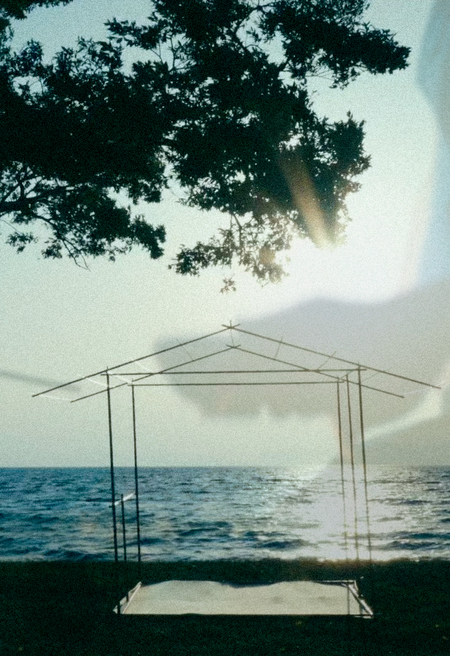
‘shi-an’ temporary tea house: Katagiri Architecture + Design
::: TABLE OF CONTENTS:::
00.research framework
1Context
2Object of Research
3Problem & Research Question
4Hypothesis
5Research Methods
: 01.the idea of a distinct meeting
1Ichi-go Ichi-e: One Time, One Meeting
2The Value of Encounter
: 02.the tea house as a space of connection
1Historical Origins of the Tea House
2The Spatial Organization of Encounter
03.from permanence to temporality
1Reinterpreting the Traditional Typology
2Temporality as an Architectural Quality
3From a Fixed Place to a Mobile Space
: 04. contemporary architecture of encounter
4.1. architectural principles
1Foldable, Demountable and Inflatable Structures
2Lightweight and Adaptable Materials
3Mobility and Transformation
: 4.2.architectrual interpretations
1Kengo Kuma: Temporary and Mobile Spaces
2Terunobu Fujimori: Space, Body and Landscape
3Other Tea-House Experiments and Comparative Examples
: 05. conclusion::: The potential of temporary architecture
modern tea pavilions
: 00. RESEARCH FRAMEWORK
/context // /
In contemporary architectural practice, the relationship between space and temporality is explored through mobile, inflatable, foldable and demountable structures. These approaches make it possible to create environments whose physical form, location and duration are no longer necessarily fixed.
The research brings this architectural experimentation into dialogue with the Japanese tea tradition. Rather than assuming a direct historical continuity, it examines how the temporality of human encounters may be reconsidered through the temporary existence of architecture itself.
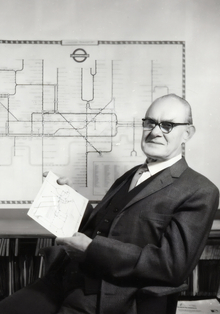
In The Book of Tea (1906)[1], Kakuzo Okakura
describes the tea room as an ephemeral space, created in response to a specific artistic and human experience rather than intended as a permanent architectural object.
the book of tea (1906)[1], Kakuzo Okakura
In contemporary architectural practice, this idea finds a new interpretation. Through modern way of exploring materials and structures, architects investigate the possibility of creating temporary environments detached from a fixed location.
The intersection of these two approaches raises a question about the relationship between the impermanence of human encounters and the temporary nature of architecture itself.
/OBJECT OF RESEARCH ///
The research focuses on contemporary tea pavilions and architectural reinterpretations of the traditional Japanese tea room, particularly those exploring temporality, mobility, material experimentation and changing relationships with place.
The principal case studies include works by Kengo Kuma, Terunobu Fujimori and some groups of architect
A limited selection of temporary structures beyond the tea-house tradition is introduced for comparison, in order to examine how similar architectural principles may create conditions for human encounter in different contexts.
Kengo Kuma and Terunobu Fujimori
PROBLEM / RESEARCH QUESTION // / /
The research examines how contemporary interpretations of the Japanese tea room reconsider the relationship between architectural permanence and the temporary nature of human encounters.
It raises the following question:
How do contemporary reinterpretations of the tea room, particularly through temporary and mobile structures, redefine the relationship between space, encounter and impermanence?
/HYPOTHESIS /// // // /
The research hypothesizes that temporality and mobility can become architectural instruments for creating distinct conditions of human encounter.
Through adaptable construction, changing spatial boundaries and the possibility of relocation, contemporary tea pavilions may preserve the essential idea of a setting for attentive interaction while transforming its physical form and relationship to place.
Architecture is therefore considered not only as a permanent object, but also as a temporary medium through which relationships between people, space and the surrounding environment can be established.
the eyes of the skin: architecture and the senses (1996)[2]
This perspective resonates with the ideas of Juhani Pallasmaa, philosopher and architecture researcher.
In The Eyes of the Skin: Architecture and the Senses (1996)[2]
he critiques the overemphasis on visual perception in contemporary architecture and frames space as a sensory, bodily experience. Crucially, his broader stance aligns with the core of this study: architecture ought to be understood not merely as a visual object, but as an environment shaped by human presence.
Building on this, architecture is conceived not simply as a permanent physical entity, but as a transient medium that mediates relationships among people, space, and the surrounding environment — where temporality and sensory engagement become central to creating meaningful encounters.
/METHODS / /
The research employs four complementary methods:
1/ /Historical and Theoretical Analysis
Examining the philosophical foundations of the Japanese tea tradition, the concept of Ichi-go ichi-e and the historical role of the tea room as a space for human encounter.
2/ /Comparative Architectural Analysis
Comparing traditional tea rooms with contemporary architectural interpretations in terms of spatial organization, human interaction and relationships with the surrounding environment.
3/ /Visual and Spatial Analysis
Studying architectural drawings, photographs, sections and spatial sequences to understand how architectural elements shape human perception and experience.
4/ /Material and Tectonic Analysis
Investigating temporary construction systems, including foldable, inflatable, demountable and adaptable structures, and examining how material and structural decisions influence the nature of architectural space.
The Tea House at the Museum of Applied Art in Frankfurt, Germany 2007
: 01. THE IDEA OF A DISTINCT MEETING
/1/
Ichi-go ichi-e (一期一会) is a Japanese concept rooted in the tradition of chanoyu, commonly translated as «one time, one meeting.» It expresses the idea that every encounter is unique and can never be repeated in exactly the same way.
In his article «Practicing Tea with a Sincere Mind» (2024), tea scholar Tsutsui Hiroichi traces the concept through the earlier expression Ichi za ichi e and the writings of Ii Naosuke, particularly Chanoyu ichi e shu.