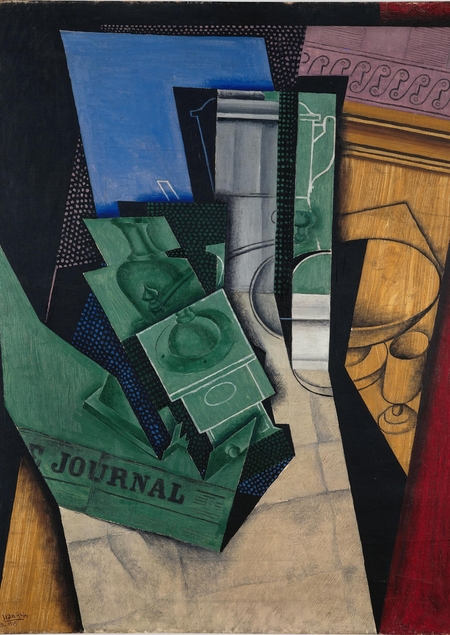
Cubism as a movement rejected the fixed, monocular point of view that was inherent to the art world of the time.
Rather than constructing an illusion of depth, artists organize the picture plane into fragmented forms: facets, intersecting planes, and simultaneous multiple aspects. Color loses its descriptive function, while light emanates from the geometric «structure» itself.
By the 1900s, Impressionism had been canonized, and even Post-Impressionists such as Van Gogh and Gauguin were regarded seriously.
Cubism emerged when artists, instead of striving to imitate reality, sought to intellectually «process» the object, demolish it and then reconstruct and present it from all sides at once, and while the reduction of natural forms to elementary volumes had precedents (for example, Egyptian reliefs), those were merely conventions, rather than intentional deconstructions of reality.
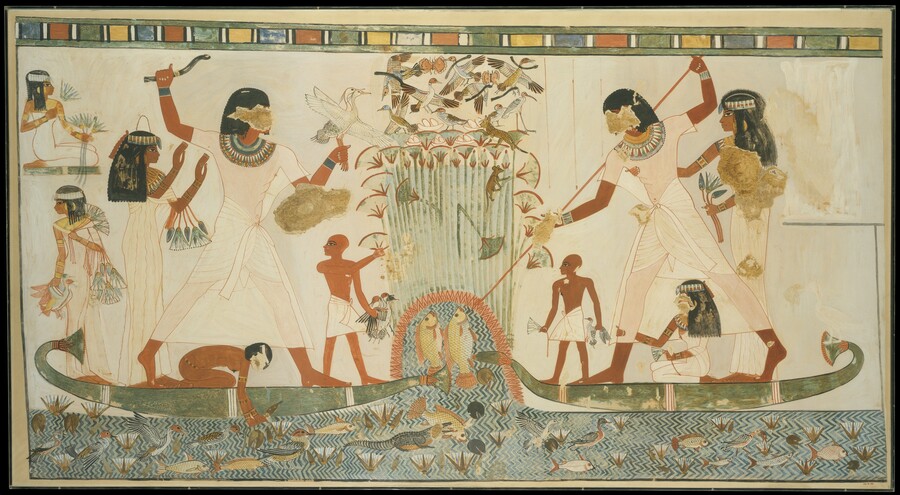
«Menna and Family Hunting in the Marshes, Tomb of Menna», (c. 1400–1352 B.C.)
The inception of Cubism as a movement is dated to 1907, the year Picasso began his work on «Les Demoiselles d’Avignon». The painting marks the beginning of the conscious destruction of perspective and anatomy.
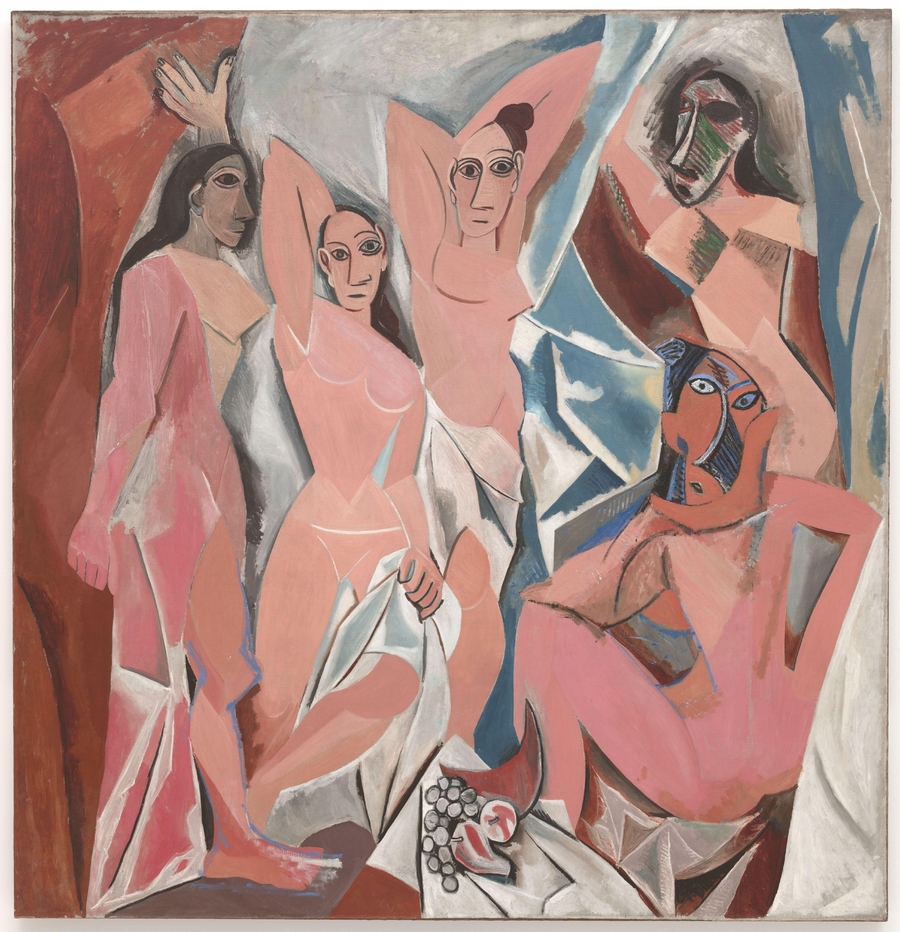
Pablo Picasso, «Les Demoiselles d’Avignon», 1907
The primary inspirations for cubism were Cézanne’s posthumous exhibition and African sculptures.
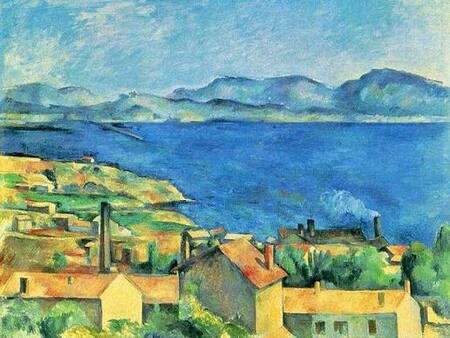
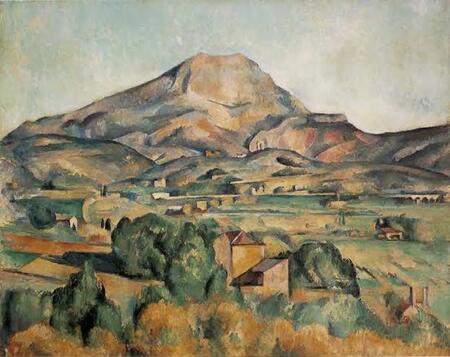
Paul Cézanne’s works that inspired cubism
Comparison of African sculptures and Picasso’s works
Principal practitioners
— Pablo Picasso;
— Georges Braque;
— Juan Gris.
Principal theorists
— Guillaume Apollinaire («The Cubist Painters», 1913) divided Cubism into scientific, physical, and Orphic;
— Albert Gleizes and Jean Metzinger («On Cubism», 1912), argued for a multiplicity of viewpoints.
The name of the movement, «Cubism», was introduced by Gleizes — initially a term of abuse from critic Louis Vauxcelles, who called Braque’s works «Bizzareries cubiques» (eng. «Cubic oddities»).
Analytical Cubism (1908–1910)
Picasso’s «Portrait of Ambroise Vollard» (1910), face dissolving into grey planes;
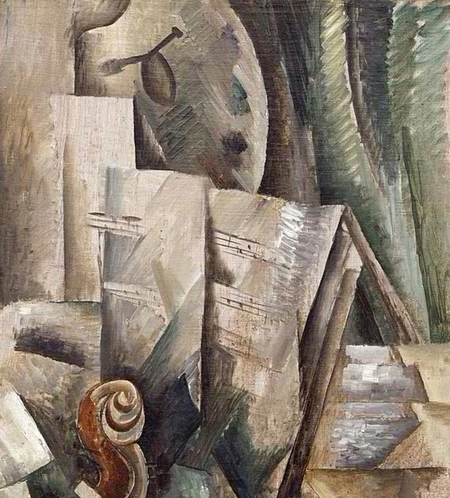
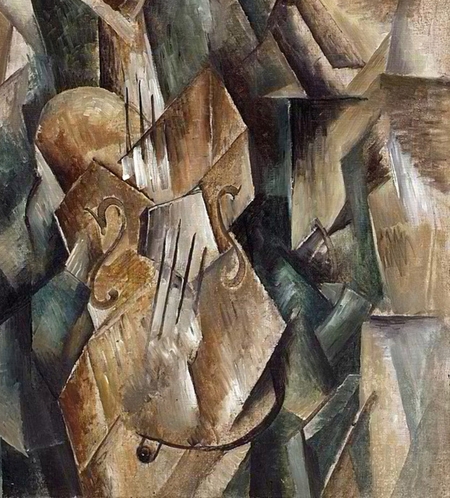
Braque’s «Violin and Palette» (1909), instrument fractured into simultaneous frontal and lateral views.
Synthetic Cubism (c. 1912) introduced collage:
Juan Gris’s «Breakfast» (1914), which incorporates wallpaper.
Cubism ceased to actively «exist» in 1914, as Braque was mobilized for World War I and the dialogue between him and Picasso came to an end.
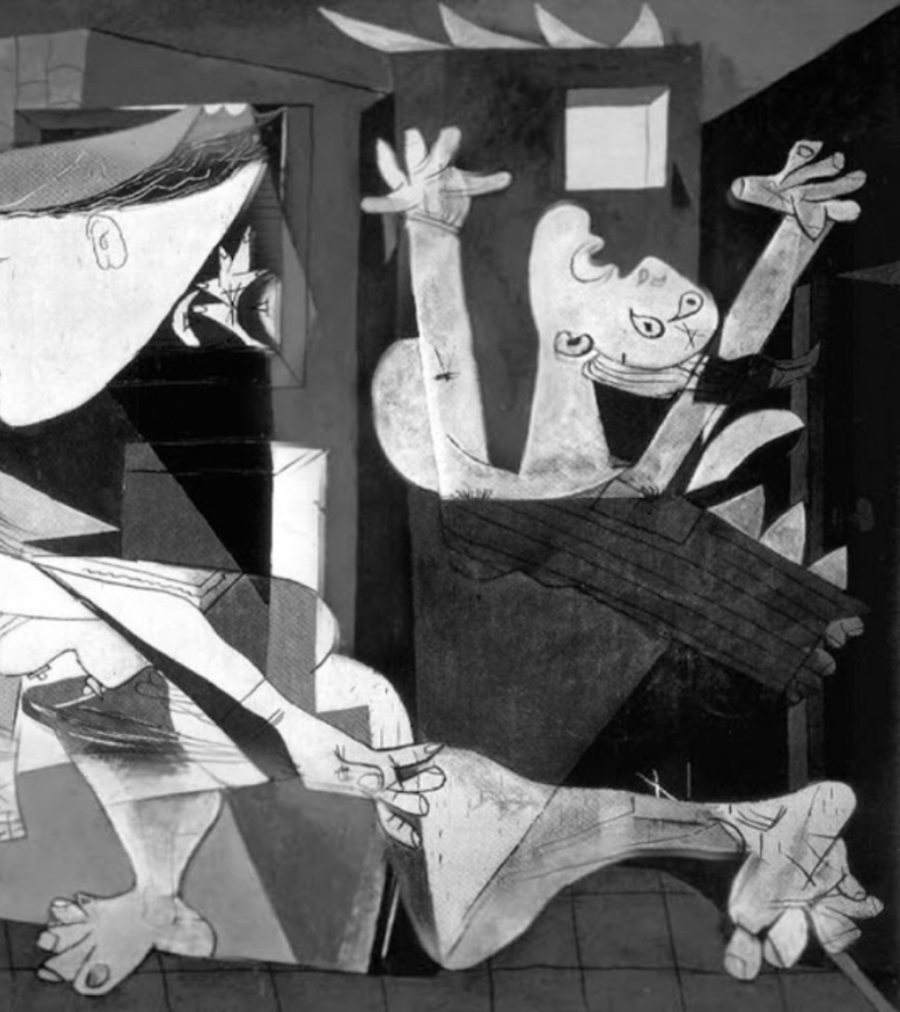
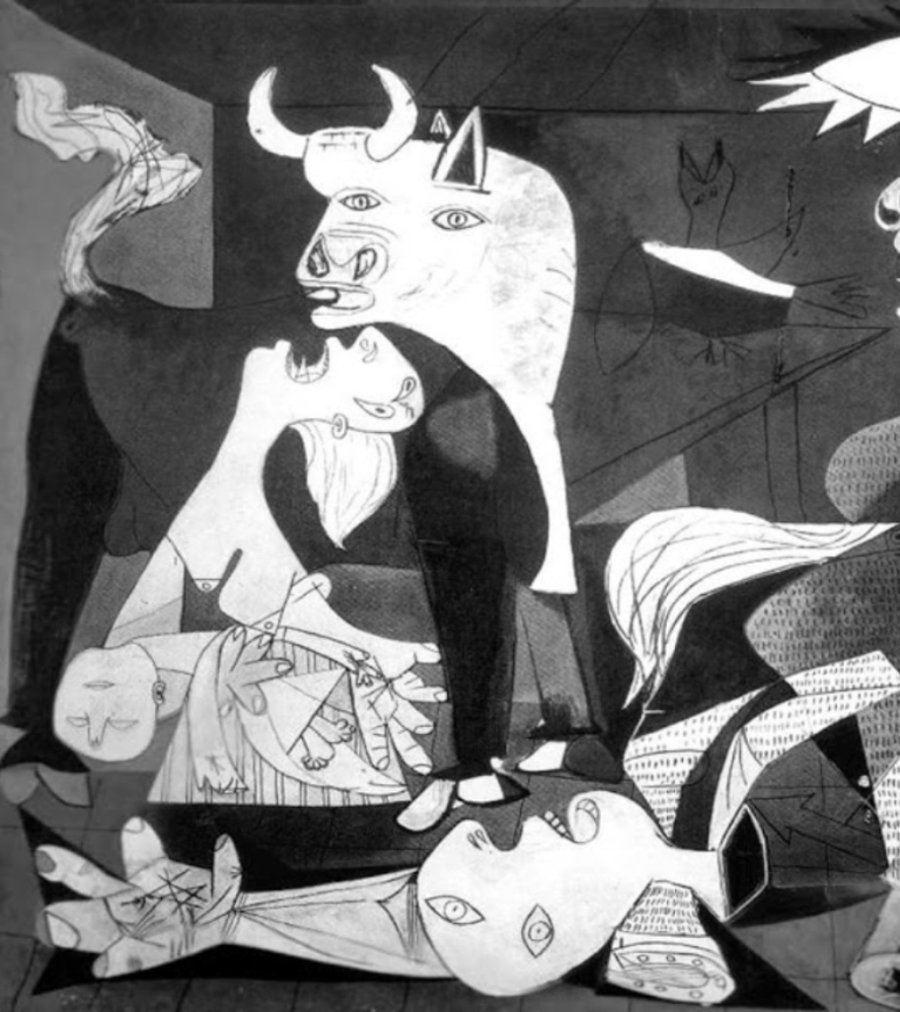
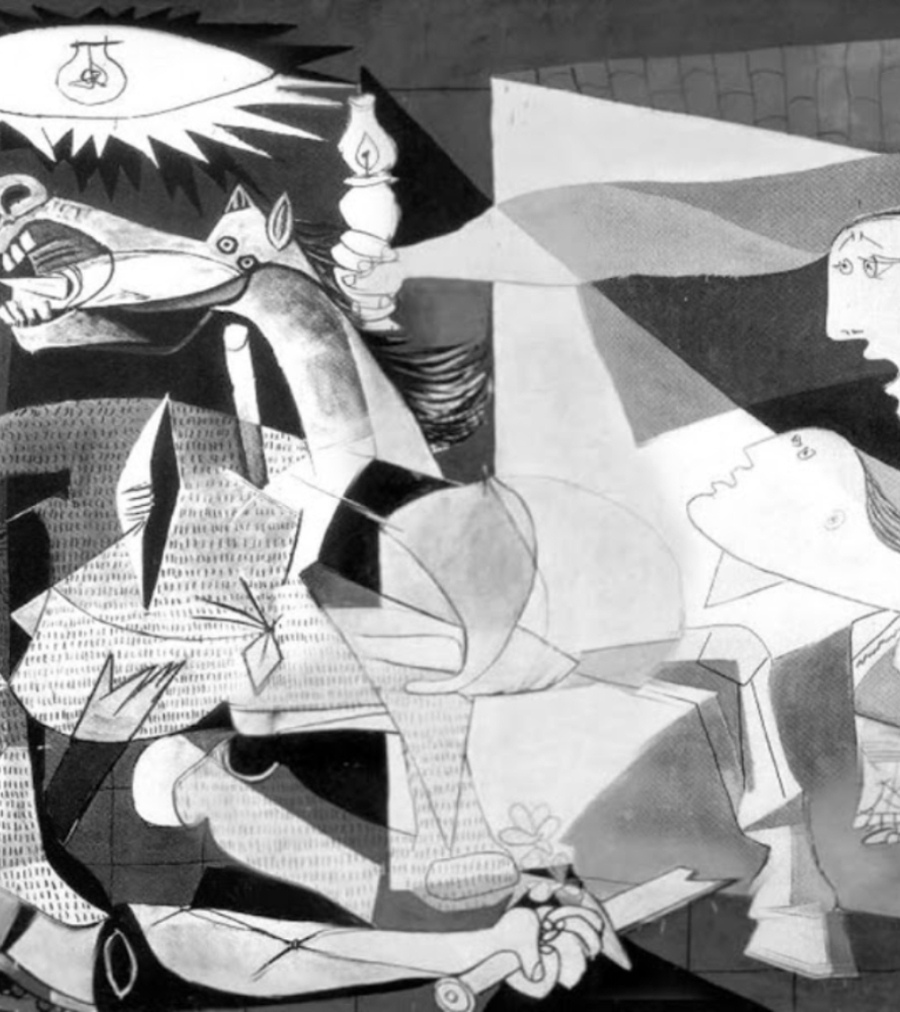
Two decades later Picasso created «Guernica» (1937) in response to the bombing of a Spanish town by German aviation — a landmark work of Cubism (with a dose of Surrealism) that falls outside of the main period.
Cubism’s legacy proved foundational. Dada appropriated its fragmentation, Constructivists extended its logic from plane to real space. Malevich’s Suprematism emerged from Cubism, yet the «Black Square» dispensed with referentiality. Even Surrealism inherited the «idea» of deforming reality.
Marcel Duchamp, «L. H. O. O. Q.», 1919
Kazimir Malevich, «Black Square», 1915
The movement lasted barely a decade, yet irrevocably altered art. The Cubists were the first to assert that a painting need not resemble anything beyond itself.
Without this Rupture, Abstraction, Collage, the Readymade, and the modern conception of art as an autonomous language of form would not exist at all.