Original size 2048x2890

CRUNCHIT

PROTECT STATUS: not protected
This project is a student project at the School of Design or a research project at the School of Design. This project is not commercial and serves educational purposes

How communication theory works in the field of contemporary art design

Сontemporary art operate as systems of meaning-making embedded within social, cultural, and communicative contexts. Communication theory provides a framework for understanding design not as the production of isolated visual objects, but as a form of socially situated communication that constructs relationships, identities, and shared interpretations.

First, communication theory frames design as a constitutive process rather than simple message transmission. Visual artifacts participate in shaping social reality by drawing on shared symbols, narratives, and cultural codes. Through semiotic and sociocultural perspectives, design becomes a site where collective meanings are negotiated and stabilized, positioning designers as active contributors to cultural discourse.

Second, communication theory highlights the tension between creative agency and structural constraints. Designers exercise rhetorical choice, using visual emphasis, symbolism, and emotional appeal to guide interpretation, while simultaneously operating within material, technological, and ideological frameworks that shape how meaning is produced and received. The medium, platform, and cultural economy all influence interpretation, limiting and enabling communicative possibilities.

Finally, communication theory connects design to both persuasion and reflection. On a functional level, communication concepts support engagement, relationship-building, and audience orientation. On a critical level, they allow designers and artists to reflect on power, labor, identity, and social norms, using visual form as a way to question and reframe dominant narratives.

Presentation for a general audience

big
Original size 3164x764

Slogan

Ever tried to find someone for your team at a game festival and failed? We have.

Original size 3500x1218

We’re indie-team CRUNCHIT. We were hunting for an animator at a gamefest. But there was a problem: we had no clue who among the crowd was a developer. After several hours of searching we left empty-handed.

That’s when we got it. Gamedev needs a visual sign. That’s CRUNCHIT.

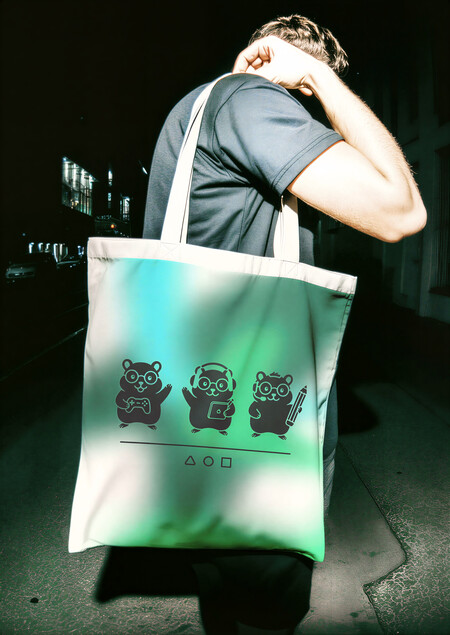
Networking: Looking for a team? Spot the hamster on a tee or tote. Want to join a team? Wear merch with your specialty.

Team Vibe: Shared style, not uniform. Everyone picks their favorite piece. It just feels right when your team has something in common.

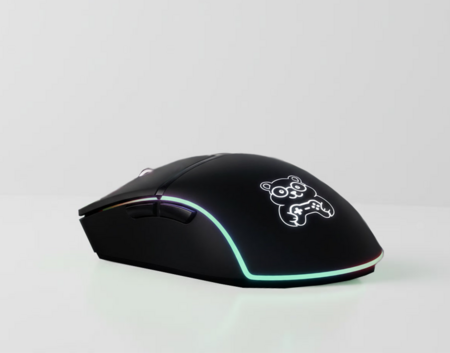
Computer mat and mouse

Community: See the merch, start the chat. Skip the small talk, dive into dev talk.

Original size 4992x3328

Join CRUNCHIT! Let’s get closer ;)

Presentation of the brand for a professional audience

CRUNCHIT is a merchandise brand created for organizations working in game development — studios, publishers, outsourcing teams, and educational programs. Its purpose is to support internal culture, team identity, and professional communication through clear, recognizable visual symbols.

Original size 3405x826

Color pallete

Game development is a collaborative and demanding process. Teams work under pressure, iterate constantly, and rely on trust and shared understanding. However, internal culture is often communicated implicitly, while traditional corporate merchandise rarely reflects the real experience of developers or contributes meaningfully to team cohesion.

Original size 4992x3328

CRUNCHIT approaches merchandise as a form of communication rather than decoration. At the core of the brand is a hamster mascot — a neutral, approachable symbol representing focus, persistence, and collective effort during production cycles. The mascot does not romanticize unhealthy work practices, but acknowledges the intensity of development work in a respectful, human, and self-aware way.

Original size 4992x3328

For organizations, CRUNCHIT provides a shared visual language that strengthens identity without enforcing uniformity. Team members can choose individual items while remaining part of a coherent and recognizable whole. This supports internal cohesion while respecting personal expression.

CRUNCHIT also functions as an external communication tool. At professional events, conferences, and educational settings, the merchandise makes teams visible through people rather than marketing materials, supporting networking, recruitment, and community-building.

The brand is designed to be flexible and scalable. Its visual system can be adapted to different studios, projects, or educational programs while maintaining a consistent symbolic core. This allows organizations of any size to integrate CRUNCHIT into their culture and communication practices.

Ultimately, CRUNCHIT helps organizations express respect for developers’ work, support teams during demanding production phases, and communicate shared values in a simple, recognizable form. It turns everyday development experience into a visible symbol of professional identity and collaboration.

Explanation of how communication theory informed this presentation

The development of the CRUNCHIT brand and its two presentations is fundamentally grounded in communication theory. The approach shifts from viewing design as mere aesthetics to treating it as a strategic, audience-specific communicative practice.

Foundational Framing: Communication as Meaning-Making

The core premise is that communication is a process of creating shared meanings within a specific context (Griffin). For the general audience (developers), the context is the lived experience of game development—its frustrations, humor, and culture. For the professional audience (studios), the context shifts to organizational culture, team cohesion, and employer branding. This contextual understanding dictated two distinct communicative strategies from a single theoretical base.

Original size 4992x3328

Theoretical Application for the General Audience: Building Credibility and Community

This presentation employs a triad of theories to achieve identification and persuasion:

1. Source Credibility (Ethos): The slogan «Merch for game developers from game developers» and the opening story of a failed search establish instant credibility. By positioning ourselves as insiders who share the audience’s frustrations, we are perceived as competent and trustworthy peers, not an external vendor.

2. Narrative Paradigm (Fisher): Persuasion is achieved not through argument but through a relatable story. The narrative of failing to find an animator at a festival provides narrative fidelity—it resonates with the audience’s lived experience. The CRUNCHIT symbol is then introduced as the logical and satisfying resolution to this story’s central problem.

3. Social Identity & Optimal Distinctiveness Theory: CRUNCHIT defines the gamedev community as a distinctive in-group. The hamster mascot serves as a shared visual symbol that allows individuals to publicly affirm their belonging, strengthening their social identity («I am a game dev»). The merch transforms from apparel into a tool for instant in-group recognition, facilitating trust and efficient networking.

4. Elaboration Likelihood Model (Peripheral Route — Liking):The presentation employs the peripheral cue of liking through the use of a friendly, relatable, and intentionally non-corporate mascot. The waving hamsters image and the mascot’s design are crafted to generate immediate positive affect and approachability, lowering psychological barriers and fostering an emotional connection with the brand before any utilitarian benefits are processed.

Original size 4992x3328

Theoretical Application for the Professional Audience: Strategic Organizational Tools

For professional audiences, the presentation reframes merch as a strategic communication tool, grounded in organizational theory.

1. Structuration Theory (Giddens): The presentation positions CRUNCHIT as an artifact that actively shapes culture, framing it as a resource teams use in daily practice. This is directly stated in the claim that it «turns everyday development experience into a visible symbol of professional identity and collaboration,» mirroring Giddens' concept of social practices producing and reproducing social structure.

2. Functional Perspective on Group Decisions (Hirokawa & Gouran): CRUNCHIT addresses core group functions:

— Problem Analysis: Makes «weak team cohesion» tangible. — Goal Setting: Defines the goal of «strengthening team identity.» — Alternative & Evaluation: Presents a culture-centric alternative to generic swag, framed as a high-impact investment in morale and employer branding.

3. Politeness Theory (Brown & Levinson) in Organizations: Manages the «face» of both company and employee.

— For the organization, it offers positive politeness by showing respect for developers' subculture, enhancing its image as a «respectful, human, and self-aware» employer. — For the employee, it satisfies both positive face needs (belonging) and negative face needs (autonomy) by offering «a shared visual language that strengthens identity without enforcing uniformity.»

4. Sociocultural/Semiotic Traditions as Internal Branding: The mascot is framed not just as a logo, but as a boundary object. The promise that the visual system «can be adapted to different studios… while maintaining a consistent symbolic core» positions it as a shared symbol that can carry a common meaning («collective effort») across different departments (art, code, design), facilitating a unified organizational narrative.

Original size 1248x832
Bibliography
Show
1.

Mordvinova, M., & Solovyova, O. (2025). Communication theory: Bridging academia and practice [Online course]. Smart LMS.

2.

Tong, G.-T., & Kang, G.-D. (2025). The effect of internal branding on brand citizenship behavior and service performance. Journal of Innovation and Entrepreneurship, 14, 76. Retrieved December 14, 2025 from https://link.springer.com/article/10.1186/s13731-025-00539-z

3.

Park, J., & Kim, J. (2024). Exploring the relationships among internal branding, work engagement, and turnover intention. Sustainability, 16(3), 1342. Retrieved December 14, 2025 from https://doi.org/10.3390/su16031342

Image sources
1.

AI used: Leonardo.Ai: https://leonardo.ai/

2.

AI used: Chat.GPT: https://chatgpt.com/